Donald Trump’s tariff threats on film is causing considerable angst globally and extreme nervousness in New Zealand, even though detail is still entirely lacking, apart from Jon Voight’s plan, which seems to have triggered Trump’s reaction.
In discussions with the Directors Guild of America two weeks ago, I was informed that production in the US was already down by around 40%. Estimates put the global decrease at 17 – 20%.
Anecdotally, we seem to have a reasonable level of international production here right now with at least two Evil Dead films, Gollum and Zelda. The forward slate from June is supposedly looking positive at this point, too. Of course, things could change dramatically in an instant, depending on which way the wind is blowing Trump’s ‘do’.
Even though NZ seems okay for now, there is concern regarding the uncompetitiveness of our international screen production rebate at 20% plus a possible 5% uplift. When they can get a guaranteed federal 30% plus state rebates that can add up to 10% or more in Australia, it’s not hard to see why US production continues to go there.
The US guilds are cautiously supporting the call for more production to stay in California and the US, even though there is a general acceptance that runaway productions are still a necessity for the system to function.
The NZ above-the-line guilds and associations who depend primarily on domestic production for our members to be gainfully employed are much more interested in the funding available for making local films and programmes.
Scripted is still the biggest employer of crew, while scripted and factual are good job sources for both directors and editors. The funding available from NZ On Air, the New Zealand Film Commission (NZFC) and Te Māngai Pāho (TMP) is therefore crucial for the creative, cultural and financial wellbeing of DEGANZ members.
For NZFC and NZ On Air, funding comes from Vote Arts and Culture and for TMP, Vote Māori Development. For many years, the funding was essentially at a default setting. But as we all know, NZFC funding was cut last Budget, although NZ On Air’s and TMP’s funding remained the same. With the Coalition still focused on cost cutting, how our funding bodies will fare come Budget time next week is on many people’s minds.
International production is the rich cousin when it comes to the New Zealand screen industry. But international and domestic are in a symbiotic survival relationship, even though those who work primarily in international sometimes forget that. Should international production drop off, we are going to need a greater increase in funding for domestic production than we already require to carry the load. Here’s hoping Minister Goldsmith has pointed this out to his cabinet colleagues in a convincing manner.
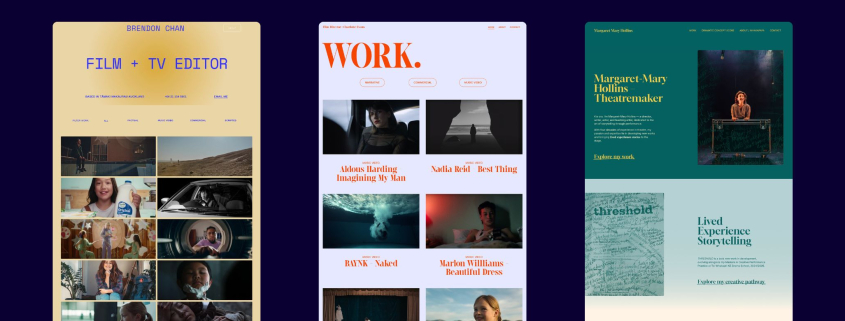
It can be useful for freelance filmmakers to have a professional online space for their work. DEGANZ’s Events and Membership Coordinator, Izzi Hoskyn, sat down with Tema Pua of Tempixel Design to chat about how having a website can help freelance filmmakers’ careers.
Tempixel Design is offering to make web design more accessible for DEGANZ members with exclusive discount codes. DEGANZ members can now get 20% off Tempixel’s website templates and 10% off the Superpixel design days.
For more information on how to access these discounts, log in to your DEGANZ account and navigate to the Member Discounts page.
Izzi: Thank you, Tema, for taking the time to chat with me today.
Tema: My pleasure.
Izzi: Can you tell our DEGANZ membership a bit about yourself and your web design business, Tempixel?
Tema: I run a small business called Tempixel Design. I’m a Squarespace web designer specifically for filmmakers, theatre artists and performers because I am also a filmmaker myself. I direct short films, I script supervise, and some of the members may recognise me as someone who used to work at DEGANZ for 6 years before I left to dedicate more time to film. I also ended up starting this business in that time.
Tema Pua and Tempixel Design logo / Photos supplied
Izzi: Nice. Why would a TV and film practitioner benefit from a website if they can promote themselves and their work on social media?
Tema: I think when we’re talking about film and TV, the industry has run for a long time—and still does—based on relationships, networking and the people you know. I think that’s a great but challenging part of our industry. But I do feel that the internet is so integral to our lives and that it’s becoming more and more important for filmmakers to have a website to promote themselves.
Having a website is a space where you can be in control of what narrative you’re putting out, that’s free from a big company’s social media brand. You’re not having to change what you do based on an algorithm or a platform deciding that they prefer a 4:5 aspect ratio, for example.
I also think ‘How often do we like to Google people?’ I was looking for a cinematographer for my short film last, last year, and I started with a long list of DPs that had been recommended to me, or ones that I had heard of through the grapevine. So what did I do? I started to go through that list one by one, Googling them.
And that’s where I think having a website to promote yourself is key to raising awareness amongst people who might want to hire you or work with you on a project, versus someone who just has an Instagram.
Izzi: Yeah, it acts more as a professional landing page for anyone who’s looking you up online.
Tema: Yeah, essentially, you can use your website to communicate your professional identity. And that can be very close to who you are in real life—hopefully! Because I’m hoping we’re all trying to be authentic. But it can also be different—to show like ‘This is me as a professional, and this is the kind of work that I do and how I approach my work professionally.’
Websites by Tempixel Design
Another big benefit of a website is that it can help you define what you do.A website can be quite useful for—particularly in New Zealand, where we often wear many hats—clearing up any confusion around what you do. Whether you want to promote all of your jobs or just your directing portfolio, for example.
I think it is important to remember that a website is essentially a marketing tool. It’s just a different marketing tool to social media. And if you’re going to have a website, it’s going to be more beneficial if you think of it as a way to help you market yourself. Rather than: ‘Okay, I just stick my work up there.’
Izzi: And hope for the best.
Tema: Which often tends to be the case in screen. But you never know, having a website could give you the edge over someone else to get a job.
Izzi:We’ve talked a lot about the pros of a website. But how easy is it to build your own?
Tema: Today, now more than ever, it’s very easy to build a website because we’ve got website platforms that are easy to use, created for non-designers. I’ve chosen to work in Squarespace because I think it’s really easy to use and the learning curve isn’t steep. It’s quite easy to equip my clients to be able to use it. And I think that can be very empowering, because you may not want to keep paying a web designer or developer to update your website whenever you want to make a change, which used to be the case.
I did want to mention, though, that while it’s easy for people who don’t work in web design to create their own website, it’s good to be aware of basic web design conventions. For example, creating a website that’s easy to use and navigate is important.
Izzi: What then are some tips and tricks for designing your own website?
Tema: One area where filmmakers can improve their websites is to include one or more photos of yourself on your website.
Remember that we are a relationship-based industry. So, personal connection is important. Allowing someone to see another human being’s face is a really quick way for our brains to be like, ‘Oh, okay, I could possibly connect with this person.’
I also think what’s really helpful is explicitly telling people what kinds of projects you’re interested in working on. Because it can already be a guessing game. When you haven’t met that person, it can be hard to know what they want to be working on just from images and videos from their portfolio.
Examples of non-faceless websites by Tempixel Design
Izzi: Shall we finish with how Tempixel Design can help DEGANZ members with starting their website journey?
Tema: If you’re building your own website, I write a blog where I share tutorials, tips and guides specifically around Squarespace for screen and theatre practitioners. So feel free to check that out.
I’ll be providing a discount for DEGANZ members on all of my website templates for Squarespace. A premium template can help you get a leg up if you’re not sure where to start or you don’t feel you have sufficient design skills.
Members can also get a special discount on my Superpixel design days if you would rather leave your website with an expert and have your to-do list done for you. And tasks can be anything that you just can’t fix yourself or don’t have the time for, or maybe you want to refresh your website.
Izzi: Amazing! Thanks again for your time, Tema.
This interview has been edited for brevity and clarity.
http://degnz.sensedesign.co.nz/wp-content/uploads/2025/04/Blog-Header.jpg7802060admin/wp-content/uploads/2021/10/DEGANZ_logo_home.pngadmin2025-05-01 17:05:112025-05-01 19:31:59How a Professional Website Can Help Your Film Career
We held a successful Screenlink event last night together with Advertising Producers Aotearoa. The topic was the nature of working across TV commercials, scripted and narrative features.
It was interesting to hear about the pathways from some of the people in the room on how they got into, are progressing, or got ahead in the screen industry.
A common theme from some was the low-budget scripted pathway through TikTok and web series. We’ve seen this with some of our members, writer and director Victoria Boult being the most recent example, with nOOb.
nOOb started out as a short, scripted TikTok series funded by TikTok and NZ On Air, and became a half-hour series now available on ThreeNow. The show has since been selected to appear at the Berlinale Series Market this year, and recently earned a spot at Canneseries 2025, where Victoria is heading off to shortly.
While just doing it is definitely a path that can work, either self-funded or with funding assistance, the guild worked on more formal pathways with other guilds and associations for new entrants to the working screen industry.
We spent two years engaging with the SkillsActive initiative, and then for two years with Toi Mai, the Workforce Development Council that included the screen sector, which replaced SkillsActive.
With the change of government at the last election, Te Pūkenga, the amalgamation of Institutes of Technology and Polytechnics (ITPs), and Toi Mai are disappearing. The disestablished Te Pūkenga will essentially go back to the old model of a network of Institutes of Technology and Polytechnics (ITPs). Meanwhile, the Workforce Development Councils (WDCs) will be taken over by Industry Skills Boards.
The work we and the other guilds and associations did across those four or so years, while not a complete waste of time, does frustratingly seem in large part to be in vain. To be totally honest, we are pretty much where we were five years ago when we started on this.
One of the issues that we constantly encountered was the round peg screen industry being forced into the square hole of the formalised vocation training sector. It was never a comfortable match no matter how much your tried to shave off the round peg to fit.
Educational theory has its place, as do the practical elements of production as practised at the various film and media schools. But they never really prepared the graduates properly for the requirements of the working screen industry—something we all really wanted to address. This was made difficult, however, by the nature of screen sector work itself, which can be intermittent, is rarely long in nature, and requires screen workers to move from one production company to another, making tracking and training difficult.
We haven’t given up though.
When the new entities are in place we will undoubtedly engage with them once more and try to find a way through. But we’d much rather just be given some of the money, which for the wider reform of vocational training has gone into the millions of dollars, and get on with it ourselves.
We know pathways are needed. And we know we can build them if we are given the resources to do the job. That’s undoubtedly too simple a solution for what is made out to be a complex problem, certainly for the screen sector.
In the meantime, we encourage you to just keep doing it as well. And networking to find your way in—a tried and true method that still works.
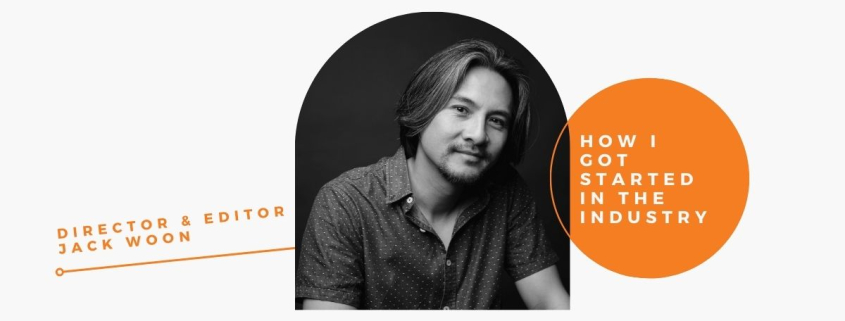
I made my first film when I was about 8. I hijacked my dad’s chonky Hi-8 home video camera, hit record, stopped, then hit record again. I could make people vanish!
In my first year of high school, I made a Star Wars parody about the ozone hole for a social studies project. The ozone molecules did a trench run and blew up the chlorine Death Star and the universe rejoiced. My teacher screened it in the school’s little theatre where I got a standing ovation. 25 years later, I’m still idiotically chasing that rush.
My addiction followed me to university where I formed a film club with the dream of making a feature film. After about a year and a half of begging people for favours (what I believed the role of a director truly was), abusing student loan funds for late-night shoots in between lectures, and editing in my bedroom, we put up posters and sold tickets like drug dealers around campus. (Incidentally, one foolish stranger who handed me cash on the street was Hweiling from a few blog posts earlier). We managed two full houses at the Academy Cinema.
Rocking the Aaton Super 16mm camera for the short film ‘Venture’ / Photo: Supplied
That cheesy Bollywood-inspired musical rom-com was the turning point for me. Word got out that this kid could finish what he started. I met some of my dearest friends and mentors because of that reputation. One of them was Steven Chow, who gave me my first paid gig, assisting him on Kōrero Mai. Not long after that, my name got put forward for an Online Editor job. I didn’t tell anyone that I’d never worked as an Offline Editor before. It turned out just fine – I had already suffered through years of Avid clunkiness and had even begun to love it.
Left: Timeline for NHNZ doco, Right: Jack’s Edit Suit at NHNZ / Photos: Supplied
After each gig, I faced unemployment and contemplated changing careers. But at the last moment, there would be a call or email, buying a lifeline of another few weeks or months. I’m constantly amazed that I’m still even in this industry.
I went from editing at TVNZ on FRESH, to NHNZ Dunedin where I worked not only as an editor but also writing and directing factual programmes at an international scale. I had stints in China and India, as well as time in Samoa with my ‘film family,’ Stallone and Abba-Rose Vaiaoga-Ioasa. As their editor and camera assist on Three Wise Cousins and Take Home Pay, I got a front-row view of how they make feature films #forthepeople. Covid hit and I directed live streams for Tourism New Zealand’s Chinese market, directed/edited TVNZ food show Sik Fan Lah! and became a drone pilot. That lifeline continues even now, as I start my next job editing season 7 of Ahikāroa.
Shooting ‘Sik Fan Lah!’ (Left: rugged shoot in Wellington, Right: shooting Sam Low’s meal) / Photos: Supplied
Yes, I edit – it’s how I get fed. But I never saw myself as an editor. I also love writing and directing – it’s just hard to make a living that way. Good editors are forever in demand (we fix things), while directors just cause problems (half joking). The latest problem I’ve caused is an NZFC kung fu short film, Let’s Settle This!, which may just top my Ozone Depletion Trilogy. I can’t wait to share it with you all.
I reckon this blog should be called ‘How I’m Always Starting In This Industry.’ Everyday feels like step one, not knowing if there will be a step two, but at least I’m buff as because of all the treading water I’ve been doing. But I guess if I look back, there are plenty of mountains that I’ve crossed.
If there’s something to take away from my rambling journey, it’s that starting is the easiest part. What’s hard is finishing.
About Jack Woon
Jack Woon is a Kiwi-Malaysian filmmaker with two decades of experience in escaping boxes and labels. He enjoys practising his diverse skills as a director, writer, editor, cinematographer, drone pilot, engineer and coffee maker – anything to do with sharing his love for unique visual stories. As a cross-cultural nerd, he has worked on Samoan comedy feature films (Three Wise Cousins, Take Home Pay), Kiwi shows (Teine Sā: The Ancient Ones, SIS, Ahikaroa) and directed factual TV in China and India for National Geographic, Discovery and Tencent Video. He wrote, directed and edited Sik Fan Lah!, a Chinese food series, which rated in the top 10 of locally funded shows. He has put his love for food and kung fu together into an NZFC short film, Let’s Settle This!, now beginning its festival run.
How I Got Started in the Industry is a guest blog series from the Directors and Editors Guild of Aotearoa New Zealand (DEGANZ). Our members reflect on how they made their way into assistant editing, editing, and directing—with no two stories the same. They offer advice for those starting out. Get in touch with admin@deganz.co.nz if you’re a member and would like to share your story.
http://degnz.sensedesign.co.nz/wp-content/uploads/2025/03/HIGS-Jack-Woon.jpg6751200admin/wp-content/uploads/2021/10/DEGANZ_logo_home.pngadmin2025-03-26 18:38:592025-04-09 16:21:42Director & Editor Jack Woon: How I Got Started in the Industry
The success of director Miki Magasiva’s Tinā in theatres brings into focus theatrical exhibition at a very relevant time with the Ministry Of Culture and Heritage’s Media Reform Discussion document out for feedback.
Tinā ranked the third-biggest opening week for a New Zealand film, behind Hunt for the Wilderpeople and Sione’s 2: Unfinished Business.
In only its second week of release, last weekend’s attendances saw Tinā’s total take increase to $1,992,389 at the NZ Box office, pushing it into the top 10 films in NZ of all time.
At a time when streamers, digital convergence and a high cost of living are supposedly ringing the death knell of theatrical, it’s clear that Kiwis will still turn out to theatres for a film that resonates.
And it’s not just in New Zealand.
Reported in screendollars.com, “the popularity of movie going in China fueled a US $3.8 billion global box office take for February 2025. This made February the second highest grossing of the decade to date, only falling behind July 2023 when the ‘Barbenheimer’ phenomenon drove receipts. What’s more, it also meant that Global results topped the pre-pandemic three-year average (2017-2019) by 7%.” And it’s Chinese films that often drive the box office there. Read the full article here.
In France, where film is seen as a key component of French culture, Le Monde reports that The French industry recorded a million more cinema-goers in 2024 compared to the year before and is back to the same level of revenues as the pre-Covid era, setting it apart from its peers, industry figures show. The French being French, they ensure through government policies, various incentives, taxes and fees that French film production and distribution is well funded, and that French audiences get to see films at reasonable prices. Read more here.
While other European countries aren’t faring quite as well as France, The European Audiovisual Observatory told us at the end of last year “that cinema attendance in 2024 was down 2% over 2023, and that it appears to have settled at around 24% below pre-pandemic levels (2017–2019), suggesting that the post-pandemic rebound has run its course and that the market may have reached a new equilibrium.” Read here.
Back home in New Zealand, we can see similar indicators from box office numbers thanks to Box Office Mojo, with a decrease in receipts in 2024 from 2023 at a higher 10%, and a drop of around 28% from pre-pandemic levels in that 2017 – 2019 period. Whether or not we are reaching a new equilibrium or not here is unclear, at least to me.
New Zealand Yearly Box Office
Data as of Mar 11, 19:47 PDT
Year
Total Gross
%± LY
2025
$13,488,156
–
2024
$87,786,884
-10.4%
2023
$98,018,580
+9.8%
2022
$89,227,396
+37.5%
2021
$64,881,995
+0.4%
2020
$64,631,961
-47.6%
2019
$123,284,717
+6.7%
2018
$115,590,406
-7.4%
2017
$124,828,159
-12.6%
2016
$142,847,305
+11.3%
2015
$128,323,590
-9.1%
Source: Box Office Mojo
Our domestic film ecosystem is far more fragile and far less supported than in Europe, which is why it’s so important for Kiwis to keep turning out for New Zealand films, as encouraged to in this RNZ article here.
But that isn’t to say that every Kiwi film has to be a box office smash to be a good film. More importantly, it has to find its audience, both domestically and internationally, whether that audience be niche or broad.
In the meantime, let’s celebrate the success we are having. Congrats, Miki and team!
http://degnz.sensedesign.co.nz/wp-content/uploads/2022/12/View_from_the_top_new.png7361280Tui/wp-content/uploads/2021/10/DEGANZ_logo_home.pngTui2025-03-13 10:49:242025-04-09 16:20:09Theatrical Ain’t Dead for Local Films