The Directors and Editors Guild of Aotearoa New Zealand is both a guild and a union. We’ve been a union since 2019. The NZ Writers Guild started out as a union in 1976 and Equity New Zealand came into existence as a union in 1944. We three are the unions in New Zealand’s screen sector, and are affiliated to the New Zealand Council of Trade Unions (NZCTU).
I attended my first NZCTU biennial conference last week. One of the biggest impressions left on me from the conference is that unions are bastions of democracy. We are large and small, democratic, membership-based organisations that foster active participation. We give workers a collective voice in public policy discussions, strengthening democracy at both the workplace and societal levels while striving for workers’ rights.
So much of my work at the guild, and my colleagues at the other guilds and associations, is taken up representing you to funding bodies, government ministers and ministries, other organisations, companies and individuals. We work to make your working world better.
Another lasting impression from the conference was the unity that all unions have in pursuing the best for their members, many of whom are in a less fortunate space than those of us in screen.
DEGANZ, NZWG and Equity NZ, joined by SIGANZ and SMSG, are united in their efforts to get collective bargaining underway under the Screen Industry Workers Act.
At our Collective Power Workshop last weekend, explaining what the Screen Industry Workers Act is all about, it was encouraging to see screen workers from a variety of disciplines in attendance. They were actively engaged in learning what SIWA can do for them and how it can help to bring our industry onto a truly professional footing, on par with developed nations elsewhere. Which is why it is so disappointing that we have disunity in our sector over SIWA. All at a time when so many voices are calling for us to be united to confront the challenges facing us in screen.
I encourage all of you to watch the Choir! Choir! Choir! rendition with Patti Smith of her song ‘People Have The Power’ on YouTube. These lyrics particularly resonate:
that the people have the power to redeem the work of fools upon the meek the graces shower it’s decreed the people rule
For all of you who seek a more professional New Zealand screen industry that truly embraces collaboration, wellbeing and equity, it’s time, as Patti Smith so eloquently says at the end of the performance, to…
http://degnz.sensedesign.co.nz/wp-content/uploads/2022/12/View_from_the_top_new.png7361280Tui/wp-content/uploads/2021/10/DEGANZ_logo_home.pngTui2025-11-06 11:16:282025-11-06 11:16:28People Have the Power
Today, Thursday 22 October, it’s expected that more than up to 100,000 doctors, nurses, allied health workers, and primary and secondary school teachers will go out on strike. They are seeking better pay and working conditions, and better environments in their work places for every New Zealander. All at a time when many people, including many of those going on strike, are doing it tough.
Screen industry workers under the Screen Industry Workers Act, however, are prevented from striking. It’s one of the concessions that was made to help ensure collective bargaining for screen workers would become a reality when the legislation passed.
Well, the legislation passed. But what hasn’t happened is the collective bargaining.
SPADA, the representative body for screen producers in New Zealand, has not registered since the Act came into force in December 2022, even though they said they would.
That is more than two and a half years of ducking and diving from them while we, Equity NZ (actors), NZWG (writers), and more recently SIGANZ (techos) and SMSG (composers/audio)—all registered parties for collective bargaining—have been meeting with SPADA and amongst ourselves, to make it as easy as possible for them to fulfil on their promise. We haven’t been sitting on our hands. We just haven’t been public about it until the first quarter of this year.
Recently in industry news, SPADA’s recalcitrance has received the spotlight. An increase in cost for production due to increased pay rates has been highlighted as potentially a key reason why SPADA doesn’t want to engage. This is the scare.
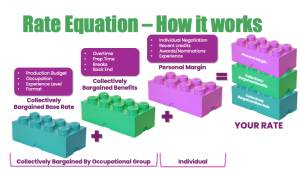
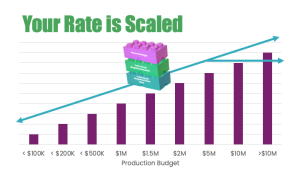
The reality: Collective bargaining will set the base rates of pay—the rates below which nobody can be paid. This does not mean high rates of pay across the board. At our Creative Power workshops, this is how we propose pay rates be established:
What you should deduce from this is that base rates of pay will differ depending on the size of the budget (budget ranges also to be negotiated). This will allow lower budget TV productions and low budget films to still be produced—a high percentage of NZ TV production is lower budget. What does low or lower budget mean? That’s to be negotiated in collective bargaining as well. Allowances would likely be made to accommodate short films and ‘amateur’ productions, i.e., no or micro-budget productions and small-budget, self-funded productions.
All of the guilds realise that there is a limited amount of production funding available. And we all want to ensure a healthy and vibrant screen production sector making New Zealand content, and servicing international production. So, we will be pragmatic in approaching collective bargaining.
SPADA: there’s nothing to be scared of. Clarity is a win for everyone.
http://degnz.sensedesign.co.nz/wp-content/uploads/2022/12/View_from_the_top_new.png7361280Tui/wp-content/uploads/2021/10/DEGANZ_logo_home.pngTui2025-10-23 11:41:272025-10-23 11:41:27There’s Nothing To Be Scared Of
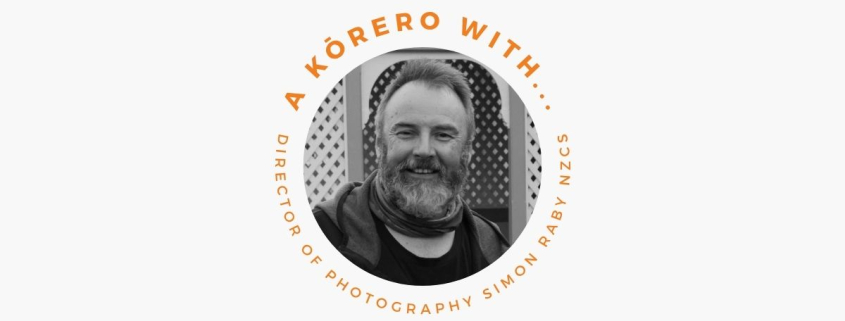
For this iteration of DEGANZ’s new blog series, A Kōrero With…, Izzi Hoskyn spoke with Director of Photography Simon Raby NZCS.
Simon is a freelance Director/Cinematographer with 45 years of industry experience. He works largely in feature films, both local and international, with credits such as The Lord of the Rings, District 9, Elysium, Deathgasm, No Exit and The Heart Dances. His latest project is as Cinematographer on Rebecca Tansley’s feature opera documentary Tenor. In 2018, he was awarded official accreditation from the New Zealand Cinematographers Society (NZCS).
In this kōrero, Simon shares his technical and creative processes, shedding light on the unique skills that a DOP brings to a project to interpret the director’s vision and help serve the story.
Izzi: What does a Director of Photography do?
Simon: At its most basic level, a DOP is responsible for how the images look on screen. My job when working with the director is as an interpreter. I’m interpreting the script, the director’s vision, and the film’s emotions and themes. For example, we may have decided to incorporate a colour theme that appears at specific points in a film to remind the audience of something or to make them feel a certain way. So, it’s not spoken, and it’s not necessarily part of the script, but you might find ways of associating certain things with a subconscious subtext, if you like. It’s all to help the narrative. I’m a storyteller, just like the director, and I have tools in my skill set that help me tell the story.
That’s why I’m called a director, because I will direct the photography in a way that interprets the director’s vision.
I’m also a translator. Once the director and I have a clear vision of what we want to do, I then translate that into technical instructions for the crew.
Izzi: I like how you described it as being a translator where you’re essentially translating the director’s vision into tech speak.
Simon: It depends on the director because every director has different strengths. Someone like Nikki Caro, who is an incredibly strong actor’s director, can very succinctly convey what she’s trying to do, but won’t necessarily say, ‘Throw on a 40 mil or throw an 85 for this.’ It’s up to me to interpret the director’s vision and go, ‘This is going to be the right lens for this kind of field of view and how much we want the background to be in or out of focus.’ But some directors, like James Cameron, will say, ‘I want a 135 on that camera,’ and he’ll know all the depth of the fields. In that instance, as a DOP, you are more in charge of making sure it all happens.
So, it really depends on what the director wants and how much they’re looking for. Most DOPs are more than happy to support the director in any way that works for that particular dynamic.
Simon working with director Rob Sarkies / Images: Provided
Izzi: The relationship between the DOP and the director is at the core of your job, but who else in the production do you work with?
Simon: The departments that the DOP is directly responsible for are the camera, lighting, and grip departments. That’s the sphere of influence that I have in terms of who I’m directing as the Director of Photography. Outside of those three teams, I also liaise with the Art, Makeup and Costume, Locations, SFX, and VFX Departments over a multitude of onscreen details.
Izzi: What does your workflow look like?
Simon: The first thing I do is read the script, and I’ll usually read it with just the story in mind at first. I’ll make notes at the end about my thoughts, how it might feel, and what sort of things came to mind as I read. Then I’ll reread it and start thinking about potential technical things.
Then I’ll usually have a series of meetings with the director, where we’ll review the director’s resources, like the mood board, and discuss them at length. From that, I will gain a clear understanding of some of the technical challenges. It’ll help me start to break down the sorts of equipment I’ll be asking for because all this is tied to budget.
Then there are a series of pre-production meetings with all the department heads, where you’ll do script breakdowns and discuss how we’ll approach certain things. Then, you’re off to do technical recess and tests. You might be doing tests with visual effects as well. You’re working with all these different departments because you’re all interested in what ends up in the frame.
After that prep process, you go into shooting and watching daily rushes with the director.
At the end of the shoot, it’s all kind of over for the DOP until the edit’s done, unless there are pick-ups. You don’t come back until the colour grade when you’re in a suite making the colours and the contrast and the look of the film as sweet as you can, often with the director.
Simon on set / Image: Provided
Izzi: The last blog we did was with Damian McDonnell, who discussed how his job as a colourist involves working closely with the director and DOP to bring their images to life. Do you have any insights on the DOP-Colourist dynamic?
Simon: Those relationships are quite personal. A colourist is both highly skilled and has strong creative ideas about how the film should look.
I’ve worked with Damien before; we did Mortal Engines together. He was the on-set colourist, and it was great because we got to set up a look on the shoot day, and then eight or nine months later, we got together again to finalise it all. So we got to know each other reasonably well. He’s such a skilled colourist and has strong ideas about how things could look, so sometimes we had to consider who had the better idea for how something should look in the grade. But it’s always about what’s best for the film and the story.
Izzi: So, we’ve discussed the technical workflow. What’s your creative process?
Simon: Personally, I rely quite a lot on instinct. I have instinctual feelings about the way I’d like to cover things. But if I had to really break it down, I know that maybe some of that is habit and some of it is cultural influences. There’s no right or wrong way, but there are more effective ways than others at telling a story. For instance, when I break down a script, I always look for important beats.
Where you put the camera is vital because it tells the viewer where they are in the room. Being in someone’s face on a wide lens is much more intimidating than watching the person from the back of the room on an 85mm. Their face is the same size in the frame, but you know you’re closer or further away because you can feel it through the lens choice.
Izzi: What sort of conversations do you have with the director around finding the beats in the scene?
Simon: That’s again a really personal thing, depending on the director. I have to feel out the director when I first meet them.
But I think it’s important to be aware that the director is responsible for how that film turns out. You’re job isn’t to say, ‘Well, my idea is better.’ Your job is to help the director make the film great. And if the director hasn’t got a vision, then often the DOP will step in and fill the vacuum, because someone will need to. So it’s really good when a director can make those calls.
Izzi: Is that something you wish collaborators, specifically directors, knew when working with you as a DOP?
Simon: Yeah, I like it when the director has a clear decision-making process, and they know what they want to do. That’s not to say that I want them to be closed to ideas, because on a good shoot, everyone is giving good ideas.
The other thing I would like to say to collaborators is that the sooner you can address something in pre-production, the smoother shooting will go. If a director suddenly says 30 minutes before shooting that they want a shot to start from above the roofline, come down the chimney, go down the pipeline, then finish on the grass, I may not have the equipment I need to make that happen. So if the director has a clear idea of the sort of shots they want to get before the shoot, it helps both the DOP and First AD.
Izzi: Do you have any thoughts on the DOP-First AD-Director dynamic?
Simon: There’s a huge amount of work that a DOP does with the First AD prior to the shoot starting. It’s an essential communication process because the First AD is working directly with the director, and they’re in the middle of the director’s quest for creative brilliance, and the production’s need to finish things on time.
Inexperienced directors will often be steered quite heavily by both the First AD and the DOP, who are working together to make sure that the schedule is honoured alongside the creative vision of the director. There’s a three-way responsibility there.
Photos from across Simon’s Career / Images: Provided
Izzi: My last question is more specifically focused on your career. What has been a career high for you?
Simon: District 9 was really great because I was directing and shooting the second unit. I would go to Neil, who was the Director, and ask what he was looking for in a scene, and he would look at me and say, ‘Just make it cool.’
And I didn’t have to spend a lot of time discussing or debating with my DOP because I was the DOP, so I could just get on with it. It was very freeing from my point of view. There were big days, but the crew was really accommodating. I had fun on that show.
Izzi: It’s interesting that you’re able to cross between being a director and DOP, or even hold them at the same time.
Simon: It depends on the intensity of the project, really. District 9 was moderately easy for me because it was mostly on-the-shoulder handheld. It was all rough and mockumentary style.
Directing and DPing use different parts of your brain as well. I like directing because I enjoy working with actors. It’s the same when operating the camera, which I love to do. I much prefer being in front of the actors with the camera than in a tent far away. It’s that closeness to what it’s all about, which is the story and the performance.
Izzi: That seems to be the common theme from these kōrero. It always boils down to the importance of the story.
Simon: Absolutely!
This interview has been edited for brevity and clarity.
http://degnz.sensedesign.co.nz/wp-content/uploads/2025/09/A-Korero-With-Simon-Raby.jpg6751200admin/wp-content/uploads/2021/10/DEGANZ_logo_home.pngadmin2025-10-02 15:22:182025-10-02 15:23:44A Kōrero with Director of Photography Simon Raby NZCS
I’ve been writing View from the Top almost every two weeks now for the last ten years. With AI such a topical issue, I thought I would task AI to write the blog for me this week to see what it came up with. I gave it one prompt, and here’s what it delivered:
New Zealand Screen Industry: What’s Shifting
Major boost to the Screen Production Rebate / Incentives
In Budget 2025 the NZ Government committed NZ$577 million over four years to bolster the International Screen Production Rebate (now part of the NZ Screen Production Rebate or NZSPR). Mirage News The Beehive The Big Idea
The rebate gives 20% back on qualifying costs for feature films spending more than NZ$15 million, and TV productions more than NZ$4 million locally. The Beehive+2National Party
This is meant to keep New Zealand competitive in attracting international‐scale productions and to sustain work opportunities for crews and post‐production. The Beehive+2New Zealand Film Commission
In parallel, there’s a new International Placement Initiative aimed at emerging‐to‐mid‐career writers, directors, and producers to take internships or placements with overseas companies (Australia, UK, Ireland etc.). Scoop
Domestic Hits with Strong Cultural & Box Office Impact
A recent example is Tinā (directed by Miki Magasiva), a Samoan‐led NZ‐story film, which has done very well locally: wide release, strong ticket numbers, and overtook Whale Rider to become one of NZ’s highest grossing domestic films. New Zealand Film Commission
Also Mārama, a gothic horror with Māori cultural and historic angles, premiered at Toronto International Film Festival, showing how even genre work drawing on indigenous narratives is getting international attention. Wikipedia
Co-productions & Treaties
NZ has formal co-production treaties or arrangements with many countries (Australia, Canada, China, UK, France, Germany, India, Ireland, Singapore, South Africa etc.). New Zealand Film Commission+2The Beehive+2
Official co-productions allow projects to gain “national film” status in both countries, making them eligible for funding or incentives in both jurisdictions, helping with financing, distribution, risk, and pooling of creative & technical resources. New Zealand Film Commission+2New Zealand Film Commission+2
Sustainability & Green Practices Increasingly Material
The organisation Greenlit launched in late 2023 and in its first year has been involved with over 50 productions (domestic and international) helping them embed sustainability practice: mandatory sustainability action plans, employing sustainability managers, measuring emissions, etc. Greenlit+2Greenlit+2
Screen Auckland also released a Screen Sector Emissions Study (“Kua takoto te mānuka”) aimed at helping NZ work toward halving carbon emissions by 2050 in the screen sector. aucklandeconomicdevelopment.com
Challenges: Workforce, Capacity & Stability
Despite the incentives and international successes, there are concerns:
Many crew report inconsistent work and uncertainty: surveys suggest that production work has dropped in mid-2025 compared with 2024, with many “crew” not knowing what their work pipeline looks like. Screen NZ International
There is a skills / labour supply issue especially in certain crafts, editing, post production, VFX etc., particularly for large international work that expects very high standards. The perception of career pathways is unclear for many. aucklandeconomicdevelopment.com+1
Domestic content ‒ even with rebates ‒ still needs stronger creative control, ownership, and infrastructure if local directors and editors are to build sustainable careers rather than rely only on international or co‐production projects.
Policy & Screen Sector Review
The government (MBIE & Manatū Taonga / MCH) has initiated a screen sector review, with goals including:
Ensuring long-term sustainability and resilience of the industry in the face of global shifts (in financing, incentives abroad etc.). aucklandeconomicdevelopment.com
Growing more local content that reflects NZ’s cultural diversity and better reaching domestic AND international audiences. aucklandeconomicdevelopment.com
What This Means for Directors & Editors
Given the above, here are some implications and strategic takeaways.
Strong incentive to aim for mid‐to-higher budget projects: The rebate scheme favours “hefty spend” productions (feature films, big TV), and the additional uplift for those that meet specific criteria (sustainability, local economic impact) means that projects that scale up tend to reap greater benefit. Directors who can package projects at that scale (financially, creatively) will find more opportunity.
Editing & Post Production Boom Potential: With more international productions choosing NZ (e.g. Avatar sequels etc.), there is growing demand for domestic post‐production, visual effects, sound, color grading etc. Editors who maintain high technical standards, familiarity with international workflows (e.g. remote collaboration, VFX pipelines, etc.) will be in demand.
Co-production is a lever: Projects structured as official co-productions can unlock more funding, access new markets, hire specialists, etc. Directors and editors can benefit from these through broader teams, varied crew, and cross‐border collaborations. Knowing the treaties (which ones NZ is signed with and what their criteria are) is valuable. New Zealand Film Commission+1
Sustainability is no longer optional: The rebate rules increasingly require sustainability plans / metrics if you want the uplift. Editors and directors need to be able to plan for greener production and post-work (e.g. power usage, travel, etc.). Understanding what a Sustainability Action Plan looks like, measuring emissions, etc., will increasingly be part of the workflow. Greenlit
Domestic storytelling is being rewarded: Films like Tinā show that local stories, especially from underrepresented communities, can succeed both critically and commercially. For editors and directors, authenticity, community connection, and strong local voice have value — and may help with funding, distribution, audience draw.
Need for clarity in career pathways: For editors in particular, the uncertainty of work and the competition from larger international projects can create unpredictability. There’s opportunity in becoming specialised (genre, VFX editing, color, remote collaboration) and staying current with tech and standards. Also, networking via NZFC trade missions, placement initiatives etc. helps. Scoop
International Comparisons & Risks to Watch
Other countries (Canada, UK, Australia, parts of Europe) continue to compete aggressively with generous incentives, often tied to tax credits, foreign spend, content quotas etc. NZ has been boosting its game but must keep the rebate scheme competitive. Ministry of Foreign Affairs and Trade
Trade and policy shifts matter: e.g. proposals in the U.S. for high tariffs on foreign films could ripple out to affect demand and how international productions allocate budgets. NZ is already taking that into account in policy. Reuters
Global supply chain and labour issues remain: cost pressures, inflation, exchange rates, travel restrictions, location access can all have impact. Editors and directors might need to plan for contingencies.
Strategic Tips for Directors/Editiors
Here are some suggestions (based on the context) to take advantage of current dynamics:
Build projects knowing rebate / incentive criteria from the start. If you want the international rebate with uplift, or want your production interpreted as a co-production, structure your creative, budget, location, crew etc. to satisfy those requirements (e.g. sustainability, percentage of NZ content, etc.).
Plan for post-production excellence domestically. If editors can be involved early in planning (workflow, VFX, color, remote collaboration tools), you’ll have more control over quality, schedule, budget. Also, consider scaling up editing VFX partnerships since NZ’s reputation is strengthening in these areas.
Engage with co-production partners. Identify treaty countries that align creatively. Co-productions may also allow you to use crew, facilities, subsidies abroad. This may allow flexibility in where some parts of editing or post workflows happen, or bring in additional talent.
Invest in sustainability literacy. Learn what a sustainability action plan includes; keep track of emissions; consider production decisions (travel, local vs overseas VFX, power usage etc.). Being ahead of this curve may help your project get the rebound uplift & also prepare you for wider international standards.
Network internationally, use placement & trade mission opportunities. NZFC’s new placement initiative, trade missions etc. are chances to build global contacts. For editors, working occasionally with international teams or on co-productions (even remote) can widen your experience and reputation.
Stay alert to domestic content demand. While big international work is good, there is increasing appetite (from funders and audiences) for stories rooted in NZ culture, indigenous perspectives, underrepresented voices. Finding ways to tell local stories with strong editing, directing could lead to both funding & audience success.
http://degnz.sensedesign.co.nz/wp-content/uploads/2022/12/View_from_the_top_new.png7361280Tui/wp-content/uploads/2021/10/DEGANZ_logo_home.pngTui2025-09-17 18:09:252025-09-18 12:48:57Scraped From the Internet
Producer John Barnett was at the heart of the NZ film and TV industry pretty much from its formative years through to today. He’s made multiple films, documentaries and TV series, employing thousands of above and below the line people along the way.
Starting out as Endeavour Productions, through South Pacific Pictures and full circle back to Endeavour, he’s produced projects with directors and editors including John Laing, Michael Horton, John Reid, Roger Donaldson, Murray Ball, Niki Caro, David Coulson, Chris Graham, Paul Maxwell, Roseanne Liang, Eric de Beus, Allanah Bazzard and many other highly reputed NZ screen pracitioners—a veritable who’s who of New Zealand screen.
Barney was as good a businessman as he was a producer. He joined the mad rush to exploit the tax loophole that witnessed the biggest output of New Zealand films we’ve ever seen in the period from the late 70s to 1984, when the government shut it down. Nearly every Kiwi producer and director at the time was in on this heyday of NZ films, which saw the setup of the NZ Film Commission and the establishment of the industry we have today. Later, he went on to make South Pacific Pictures the dominant New Zealand production company for decades, picking up a stake in Kura Productions, Satellite Media and rescuing hip-hop label Dawn Raid along the way. He eventually sold his remaining shareholding of SSP to the UK’s All3Media, which had acquired a majority of it previously.
Barney was always a force to be reckoned with. He was highly opinionated about what he thought was good and bad about the New Zealand screen industry. He went a long way in pursuit of his vision for the industry—sometimes too far—but he approached it with a passion for film and TV that was undeniable.
Across his successful career, he earned the friendship and respect of many, and the enmity of a few. I’ve encountered him many times over the years, but I wouldn’t say I knew him well. He was, though, always cordial to me whenever we ran into each other.
He seemed as active as he ever was before he passed, chairing the Vista Foundation, producing his latest TV series Dark City, lobbying government ministers to see things his way about NZ screen, actively developing projects, and I’m sure a multitude of other screen matters I have no knowledge of. Social media posts by screen industry people over the last couple of weeks highlighted the many good turns he did for them.
At his funeral service, I became aware of some of his other pursuits and the esteem in which he was held by those from different communities he belonged to. His wife made a remarkable speech that so eloquently spoke of the man she knew and loved.
John Barnett was certainly indefatigable. And he’s left an indelible mark on New Zealand’s screen industry.